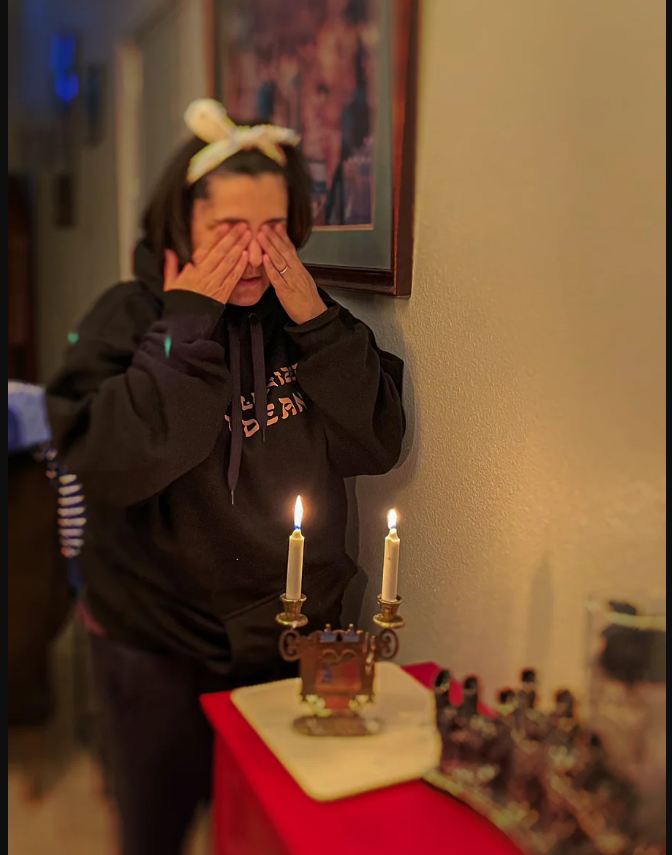
For Yasmine, becoming a Decolonized Judean is deeply personal and spiritual, but it is also work. It is not a slogan, and it cannot be reduced to a statement about contemporary politics. Her relationship to Judean identity exists alongside a belief in the shared humanity and kinship of Palestinians and Jews, two peoples bound to a land they both love.
The easy part is knowing that Jews originated in Judea. The deeper work is returning to roots obscured by centuries of conquest, displacement and assimilation: learning Jewish history before the Holocaust, before colonial rule and before communities were forced to survive under unequal legal systems.
That return takes practice. It means studying more Torah, learning Hebrew and reconnecting with the traditions that tie Jewish communities to one another and to the historic land of Israel. It means bringing tzedakah into daily life, not as occasional charity, but as a responsibility to care for community, and asking how the repair of the world can become lived behavior.
Reclamation also demands unlearning. Yasmine argues that a decolonized identity must confront xenophobia, anti-Blackness and every form of bigotry that harms Jews and non-Jews alike. Honoring ancestors cannot be separated from examining the systems we inherit, including those that can harm us while offering some of us protection or privilege.
Living as a settler in the United States adds another responsibility: listening to and materially supporting the Indigenous peoples of that land. Decolonization cannot only describe what happened to Judeans in antiquity; it must also shape how a person responds to colonial structures in the place where they live now.
That ethic reaches into struggles against rigid class systems, mass incarceration, transphobia and violence toward LGBTQ people. It also calls for stronger relationships with other Southwest Asian and North African communities, including Palestinians, and for the willingness to keep learning even when that learning is uncomfortable.
At the same time, Yasmine refuses to make Jewish identity smaller for anyone else’s comfort. Becoming a Decolonized Judean means standing visibly and confidently as a Jew, challenging antisemitism and helping others understand Jews as a people, not merely as an abstract faith.
The aim is not perfection. It is an ongoing attempt to honor ancestors through language, ritual, belief and care for others. For Yasmine, there is no meaningful decolonization while reproducing violent or colonial structures; the work must transform both how we remember ourselves and how we move through the world.