Where history becomes present
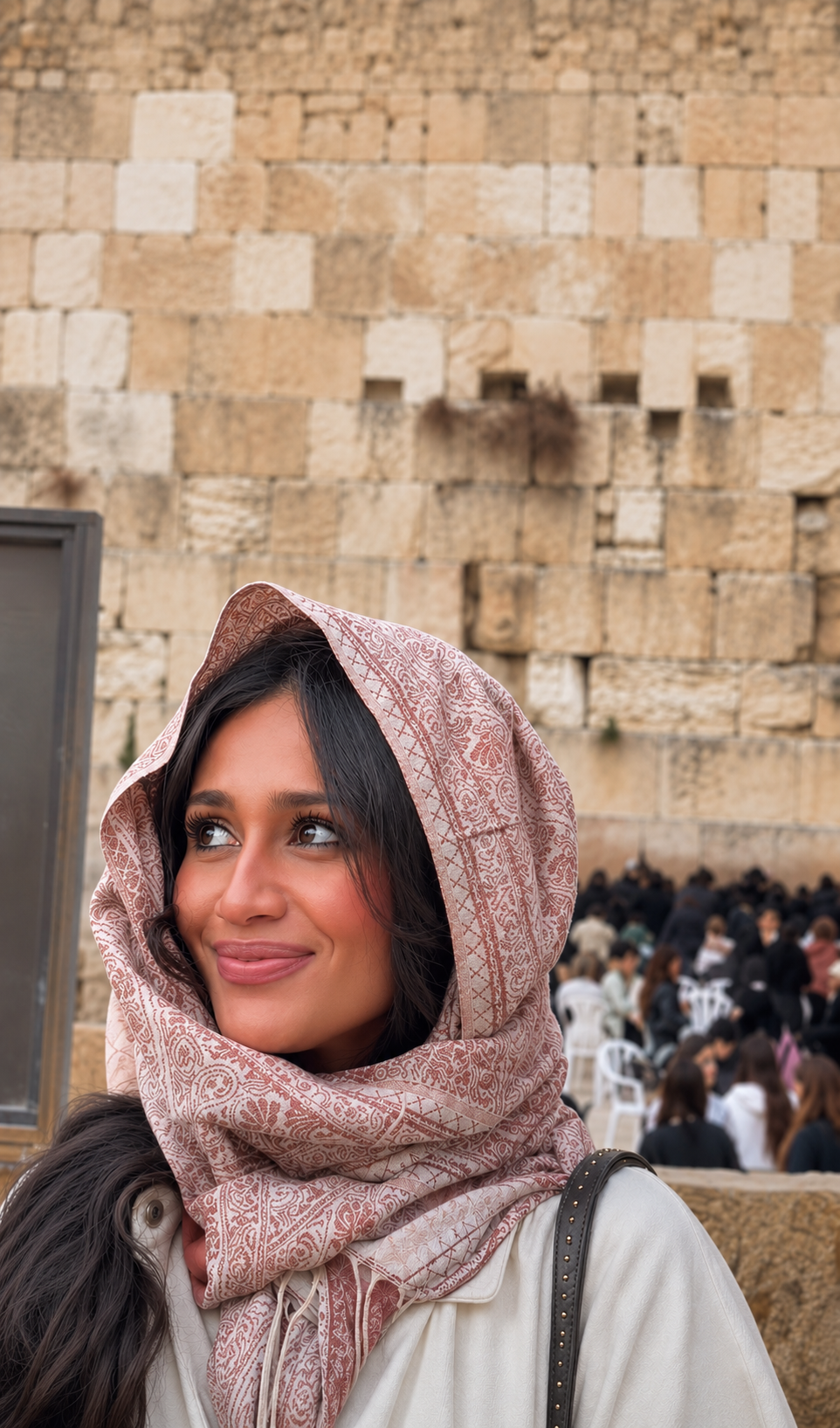
The first thing I notice at the Kotel is not silence. The plaza is alive. Children move between rows of chairs. Soldiers stand together in uniform. Families arrive carrying celebrations, worries and names they do not want the world to forget. Some people sing. Others lean toward the stones and whisper words meant for God alone.
Then I reach out and touch the Wall. History is no longer something distant, sealed inside a book. Beneath my hand are stones that have witnessed generations of Jewish longing. Around me, folded notes fill the cracks, each carrying a private story. In that moment, the question rises naturally: Why is coming to the Kotel such a powerful experience?
The Kotel, or Western Wall, is a surviving retaining wall of the Temple Mount, where the Beit Hamikdash once stood. The Temple was the center of Jewish spiritual and national life, a place of prayer, gathering and collective purpose. Jerusalem was not merely a city on a map. It was the heart toward which a people turned.
When the Beit Hamikdash was destroyed and Jewish sovereignty in Jerusalem was lost, our ancestors faced an almost unimaginable question. How could Jewish life continue without its spiritual center? Their answer became one of the greatest stories of survival in human history. We learned to carry holiness with us.
We learned to carry holiness with us.
Carrying Jerusalem across the world
Picture a Jewish family living far from Jerusalem centuries ago, perhaps in Morocco, Poland, Yemen, France or Iraq. They may never have seen the Kotel, yet Jerusalem entered their home every day. They faced it in prayer. They remembered it in blessings. At the Passover Seder they said, “Next year in Jerusalem.” At a wedding, at the height of joy, a glass was broken because Jewish celebration was still incomplete.
A mother separated challah from her dough, continuing a mitzvah connected to the Beit Hamikdash. A father taught his children prayers he had learned from his parents. A child knew the name Jerusalem long before seeing an image of it. In homes scattered across continents, ordinary acts became vessels of memory.
Our prayers, customs and mitzvot preserved our spiritual direction. Shabbat preserved sacred time. Hebrew preserved the language of our ancestors. Holidays preserved our collective story. Jewish life in the Diaspora was not passive. It was an extraordinary act of cultural and spiritual preservation.
The tears of generations
In French, the Western Wall is traditionally called le mur des Lamentations, the Wall of Lamentations. The name carries the sorrow historically associated with this place. For centuries, Jews came here to mourn the Beit Hamikdash, Jerusalem and a people scattered throughout the world. Their tears were not only for an ancient building. They held the pain of exile, persecution and lost sovereignty.
Imagine a Jewish traveler finally reaching Jerusalem after a long and dangerous journey. The traveler has dreamed of this moment since childhood. After passing through the narrow streets and seeing the stones, there are no words left. Only tears. Those tears are personal, but they also join the tears of generations. At the Kotel, an individual story enters the collective Jewish story.
Even now, every person arrives carrying something different. One comes to pray for healing. Another remembers a parent. A young soldier pauses before a new responsibility. A family celebrates a bar or bat mitzvah. Someone who has felt distant from Judaism stands before the Wall and discovers an unexpected sense of belonging. The stones receive every story.
The stones receive every story.
The flame our ancestors protected
In some ways, the Jewish people were frozen in time after the destruction. So much of Jewish life became devoted to remembering what once existed and preserving it for the future. That preservation was necessary. Without it, we might not have survived as a people. But preservation was never meant to be the final chapter.
Imagine receiving a precious flame from someone who protected it through a storm. The purpose is not simply to watch it or keep it hidden. The purpose is to use its light. Our ancestors carried the flame of Jewish identity through expulsions, persecution, migration and uncertainty. They passed it to us through prayers, teachings, recipes, melodies and stories. Now we must ask what we will do with the flame they preserved.
The time has come to transform preservation into action. This does not mean rejecting the Diaspora or forgetting what Jewish communities learned there. We should bring those lessons with us: resilience, adaptability, scholarship, communal responsibility and the ability to create holiness wherever we live. Every community added something to our shared story.
The question is no longer only how we survive. The question is what kind of people we want to become. Can we build a society shaped by justice, compassion, holiness and responsibility? Can we disagree without forgetting that we are one people? Can sovereignty become not only protection, but also an opportunity to live our deepest values?
From mourning to return
The Jewish calendar teaches us how to move from memory to action. On Tisha B’Av, we sit low and mourn the destruction of the Temples and the tragedies that followed. Then the calendar begins to change. The weeks bring messages of comfort, and eventually we enter Elul, the month of reflection, reconnection and teshuva.
I have always experienced the transition from Tisha B’Av to Elul as a relief. After facing so much collective sadness, Elul feels like an open door. It reminds us that brokenness does not have to be permanent. We do not remain seated in mourning forever. We stand, examine ourselves, repair what we can and begin again.
Teshuva is often understood as a personal process. We look honestly at our actions, ask forgiveness, repair our relationships and return to God. But teshuva can also belong to an entire people. Collective teshuva asks whether we have learned from our history, whether we honor the sacrifices of those who came before us and whether we are building a society worthy of the dreams that sustained them.
A person at the Kotel may place one private prayer between the stones, but around it are thousands of others. Each note is separate, yet together they form a picture of collective longing. Perhaps this is what the Kotel asks of us. It asks us to bring our individual hopes into a shared future. It reminds us that Jewish life is not only about what I need, but also about what we must build together.
Jewish life is not only about what I need, but also about what we must build together.
What remained
The Kotel stands at the meeting point of memory and possibility. Its stones hold the sorrow of destruction, but they also bear witness to Jewish endurance and return. A wall can represent what was destroyed. It can also represent what remained. The Kotel remained. The Jewish people remained. Our prayers remained. Our connection to Jerusalem remained.
Now our responsibility is to bring everything preserved for us back to life. We can move from remembering holiness to creating it, from longing for unity to practicing it and from mourning what was lost to building what can still be restored. May 5786 be a year of collective teshuva, healing, unity and meaningful action. May we move from lamentation toward rebuilding, from preservation toward purpose and from exile toward Geula.